Research opportunities
Donate a sample to the global Blau biobank.
Your blood or skin cells can be studied by researchers anywhere in the world. We partner with Coriell to collect and store cells from people with Blau syndrome, to speed up fundamental research and drug discovery.
Our partner
A world leader in biobanking.
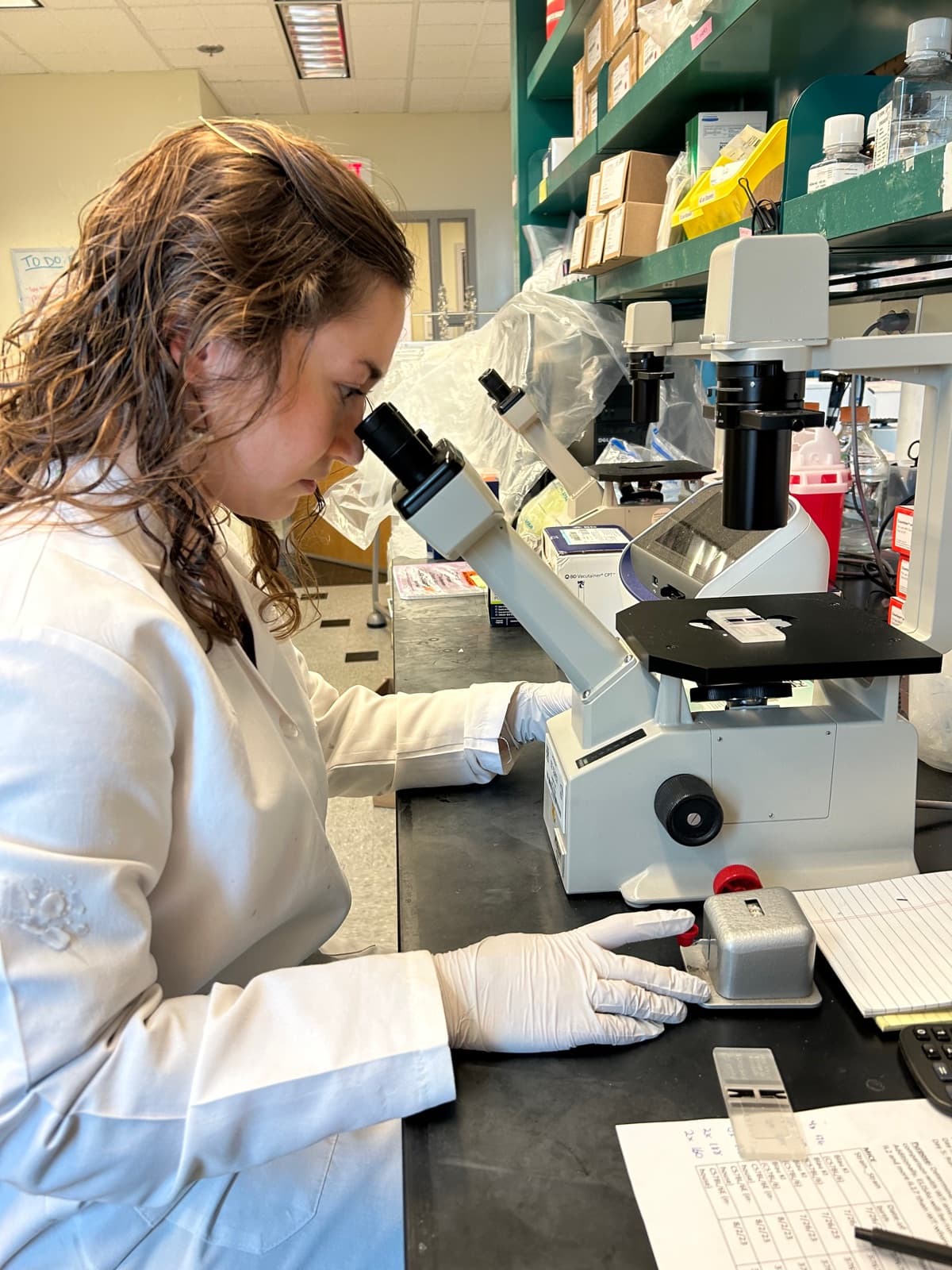
The Cure Blau Syndrome Foundation partners with Coriell, a world leader in biobanking (the collection of biosamples for research), to collect and store cells from patients with Blau syndrome. Your samples will be available to researchers worldwide, accelerating fundamental research into Blau syndrome with the goal of faster drug discovery.
The NIGMS Repository at Coriell is regarded as the most diverse collection of cell lines and DNA available to the international research community. For nearly 65 years, Coriell has set the gold standard in collecting, processing, distributing, cryogenically preserving and managing information about human biomaterials used in research. It provides scientists with well-characterized cell cultures and DNA preparations, annotated with rich phenotypic data.
Who can donate
- Patients can donate on their own behalf by working directly with Repository staff. You need to contact the Repository first and say you are interested.
- Family members of someone with Blau can donate too, as long as the affected person is also submitting a sample.
- Clinicians and investigators with access to Blau patients can submit samples, including existing cell lines from earlier studies.
How to donate
Five steps from your inbox to the lab.
Step 1: Contact the Repository
Email the NIGMS Repository at NIGMS@coriell.org to say you would like to donate blood, skin biopsy tissue, or both. Staff will walk you through the process.
Step 2: Receive your collection kit
The kit has everything you need to store and send your sample safely: blood or skin tissue tubes, a prepaid shipping label and all the required paperwork.
Step 3: Have your sample collected
At your next doctor's appointment, have a blood draw or a skin punch biopsy (2 to 4 mm of tissue, usually from the forearm). Talk with your doctor beforehand so collection goes smoothly.
Step 4: Package it and send it back
Follow the kit instructions to package the sample and ship it with the prepaid label.
Step 5: Include clinical information
Send as much clinical information as you are willing to share. Physician summary letters and genetic testing results are the most common. The more detail attached to each sample, the more useful the cells are to future researchers.
Questions
What donors ask most.
What does it cost to submit a sample?
Is donation approved by an ethics or institutional review board?
Is my personal information protected?
Can I have my sample taken during routine blood work?
Who can collect a skin biopsy?
Who has access to the samples?
What if I no longer want my samples kept in the biobank?
Also enrolling
Research study examining: Mechanisms of Disease of the Human Immune System
Currently enrolling. Contact the Foundation to learn more about taking part.
Every dollar, every hour, every voice matters.
Rare disease research only moves when families and supporters push it. Your gift funds research directly, and your story in the registry gives scientists data they cannot get anywhere else.